
Introduction
In the short term, the starch industry faces a serious challenge from artificial intelligence (AI). The infrastructure to build AI is competing vigorously for energy and capital, driving up the cost of the two most important inputs for starch processors beyond raw materials. And rising energy and mineral prices will also feed into rising crop prices.
At the same time, a sustained consumer-led transition towards concentrated nutrition has pushed the industry to prioritise the more valuable protein component of starch crops over the more abundant, but less valuable, starch component. Leading carbohydrate crops all contain various amounts of protein. But in each of these crops, the larger fraction is starch. While starch is still the main revenue stream of starch processors, the protein streams have increased more quickly in value.
Starch and protein exist in fixed ratios in crops determined long ago by evolution. Plants choose, very roughly, either a carbon path or a nitrogen-based pathway to store energy. It is more expensive in energy terms to synthesise protein, or fats, and so, unsurprisingly, the world’s arable crops contain mostly starch, much less protein, and even less fats or lipids.
Increased supplies of starch — which is effectively renewable carbon — should be a good thing in a world short of sustainable energy. The problem is that it takes very large capital investments and also a lot of energy to get the renewable energy out of crops for use in fuels, chemicals, plastics and the many other things you can potentially produce from starch. In a world in which both energy prices and interest rates are rising, you would have to be a brave investor to bet hundreds of millions of dollars on a new processing plant extracting relatively low quantities of some very valuable protein from the starch in a carbohydrate crop.
In the future, perhaps AI will solve many of the hard problems that prevent the wider and more economic conversion of starch into useful products. This is a long journey that begins in the field and runs all the way through the enzymes and microbes that are used to extract starch from plants and convert them into other products.
AI macroeconomics
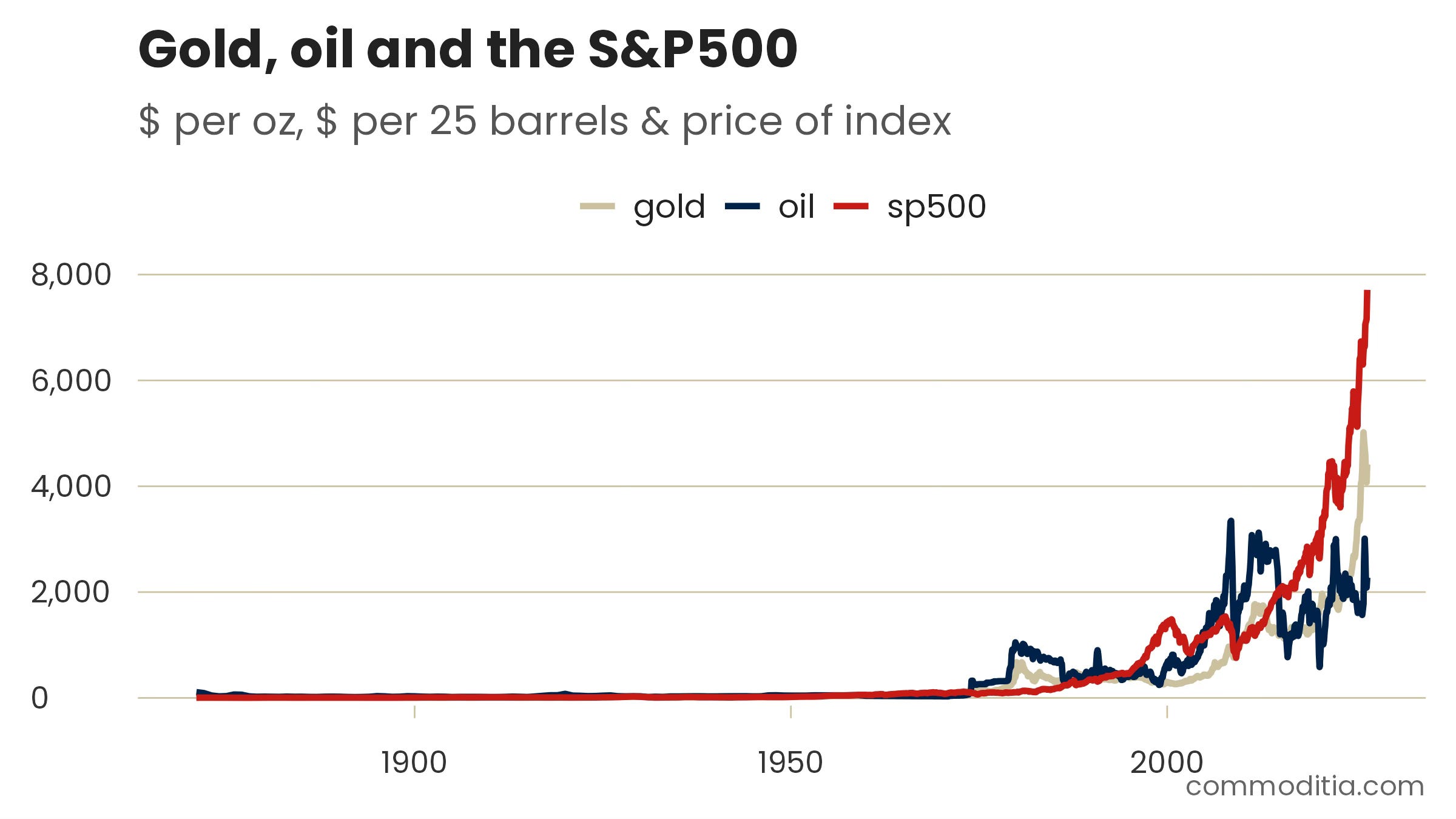
To understand the issues, let’s begin with where we are in the macroeconomic cycle. Chart 1 reveals the sharp run-up in the prices of stocks, gold, and oil in recent years. What is slightly strange is that the price of energy, in the form of oil, looks relatively cheap compared to the prices of stocks and gold (after the price of oil per barrel has been scaled up by a factor to fit the other curves). Bear in mind, though, that rising energy efficiency helps to moderate the rise in oil prices and accounts for some of the price discount.
Chart 1: Macro prices are heading skywards
Viewing the ratios of the S&P 500 to the prices of oil and gold (see Chart 2), we see more clearly the macro cycles of the last 100 years, and particularly the oil price shocks of the 1970s; the dot-com boom, and now an AI boom.
Chart 2: We are “at the top” of a macro cycle
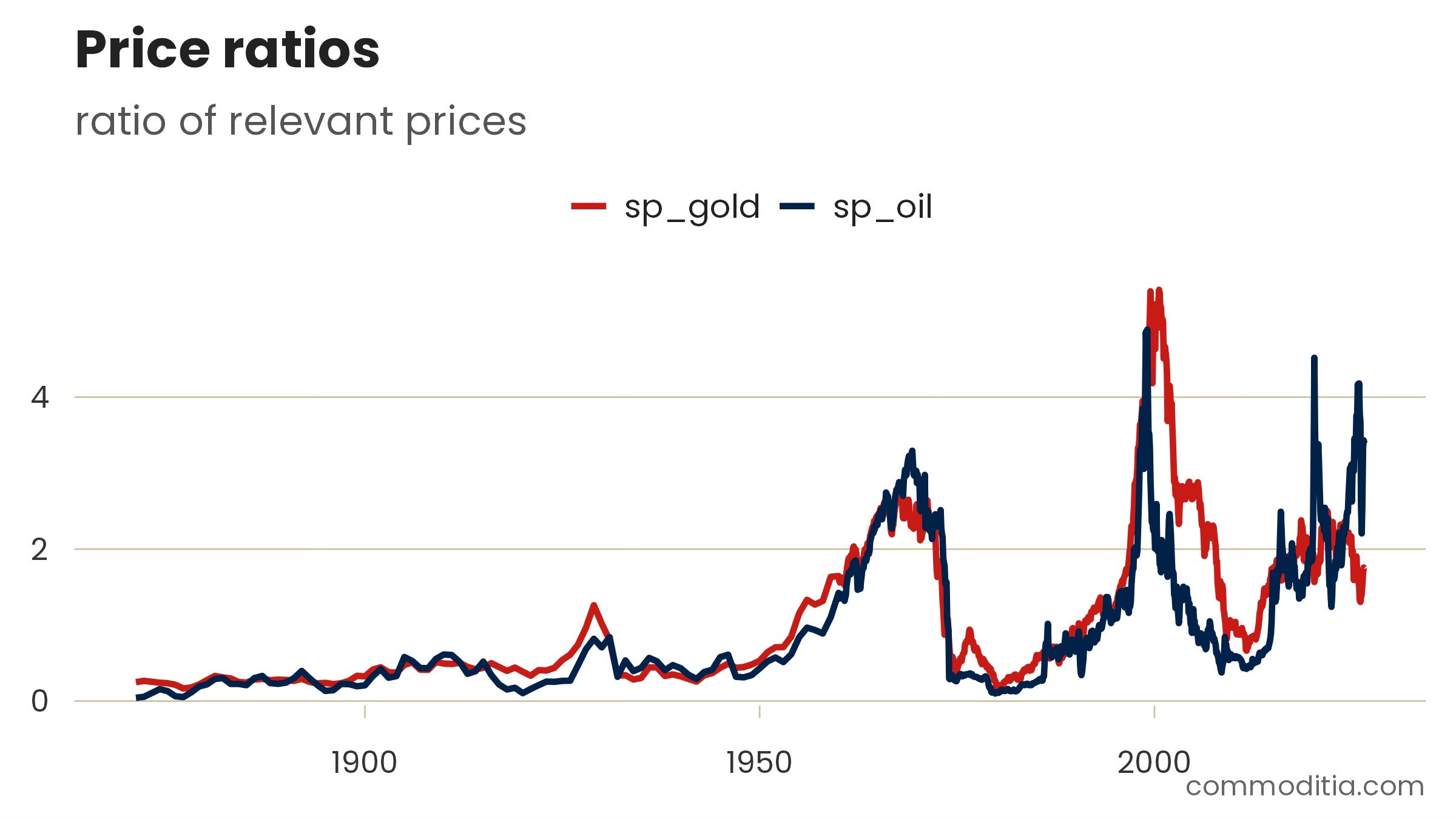
Whilst there is no guarantee that history will repeat itself, we get a strong sense that the run-up in gold prices is actually doing what it should: it is revaluing the S&P 500 downwards to more “normal” real levels. What is also clear is that the ratio of the S&P 500 to oil prices seems to be floating on high. In the past, this ratio has always returned to earth, which means that either stock prices should come off or energy prices should rise. With trillion-dollar investments in AI, the short-term bet is surely that the energy markets are likely to tighten further, unless perhaps there is some drastic realignment of the situation in the Middle East, or a market correction.
These price misalignments extend broadly to minerals and metals, the prices of which have also fallen back relative to gold. This seems strange when each of these commodities is essentially dug out of the ground. But gold is, of course, the most liquid and transparent asset being used to price an emerging reality, and production of gold adds so little to global stocks that its pricing can diverge from other minerals. But is this pricing now suggesting that the prices of other minerals must now catch up, especially because so much new technology uses these earth-bound commodities?
When we view the price of energy from both oil and corn and alongside the value of a basket of consumer goods in the US, and all in terms of gold, it becomes much clearer that something strange is going on. Real gold-adjusted energy prices (expressed as the amount of energy in giga joules an ounce of gold can purchase) are very low in historical terms, meaning you can buy a lot of energy with gold today (Chart 3).
Chart 3: Can you believe energy is this cheap?
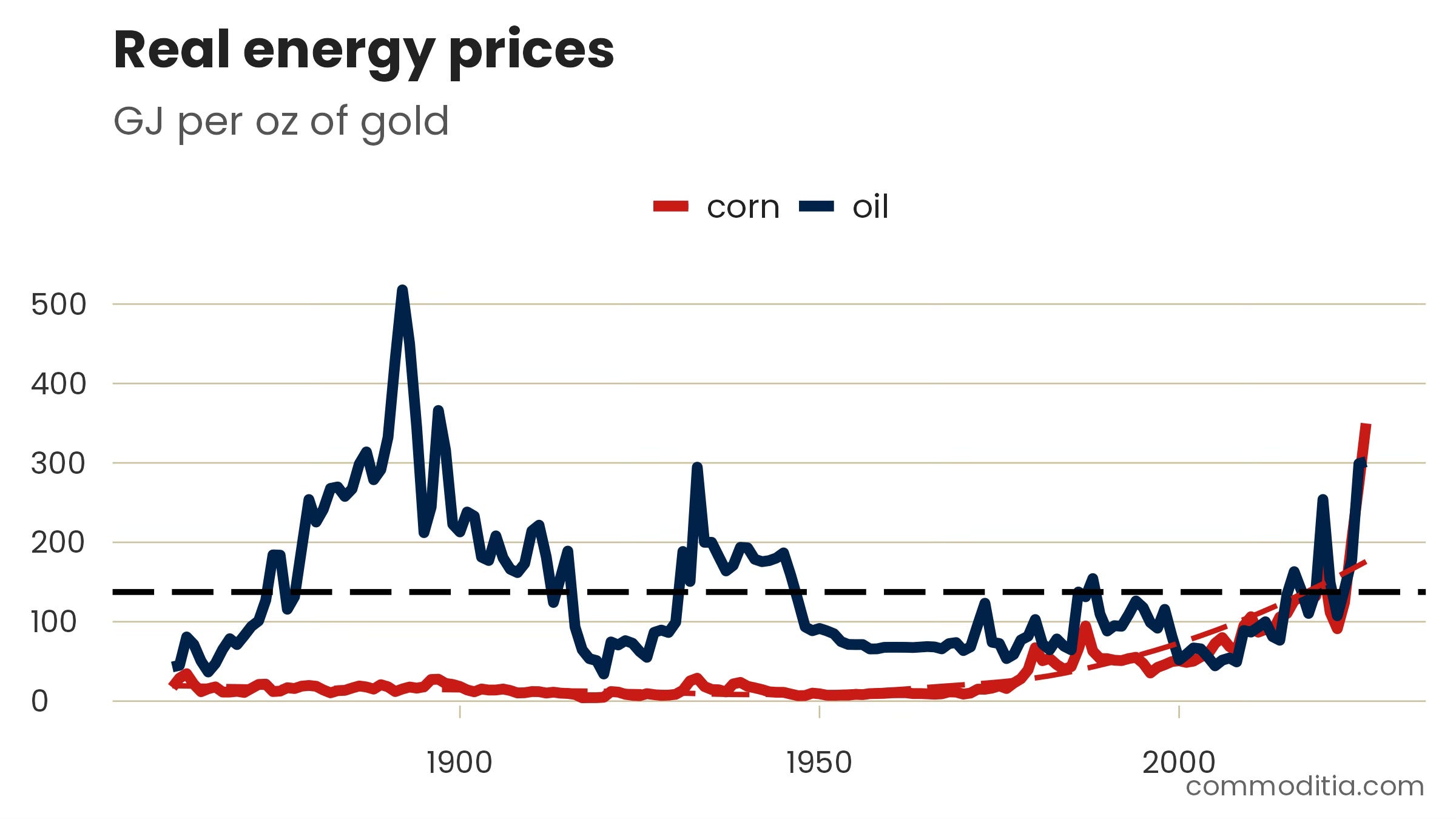
To find when an ounce of gold was worth this much energy, you have to go back almost all the way to the Great Panic in the US of the 1890s. We also see that the price of energy from corn has converged more or less on the price of energy from oil. What is really strange is that the value of a basket of goods in the US has fallen so sharply compared to the price of gold, so that a gold coin now buys many more baskets of goods than in the past (see Chart 4).
Chart 4: And gold will buy you a big shopping basket
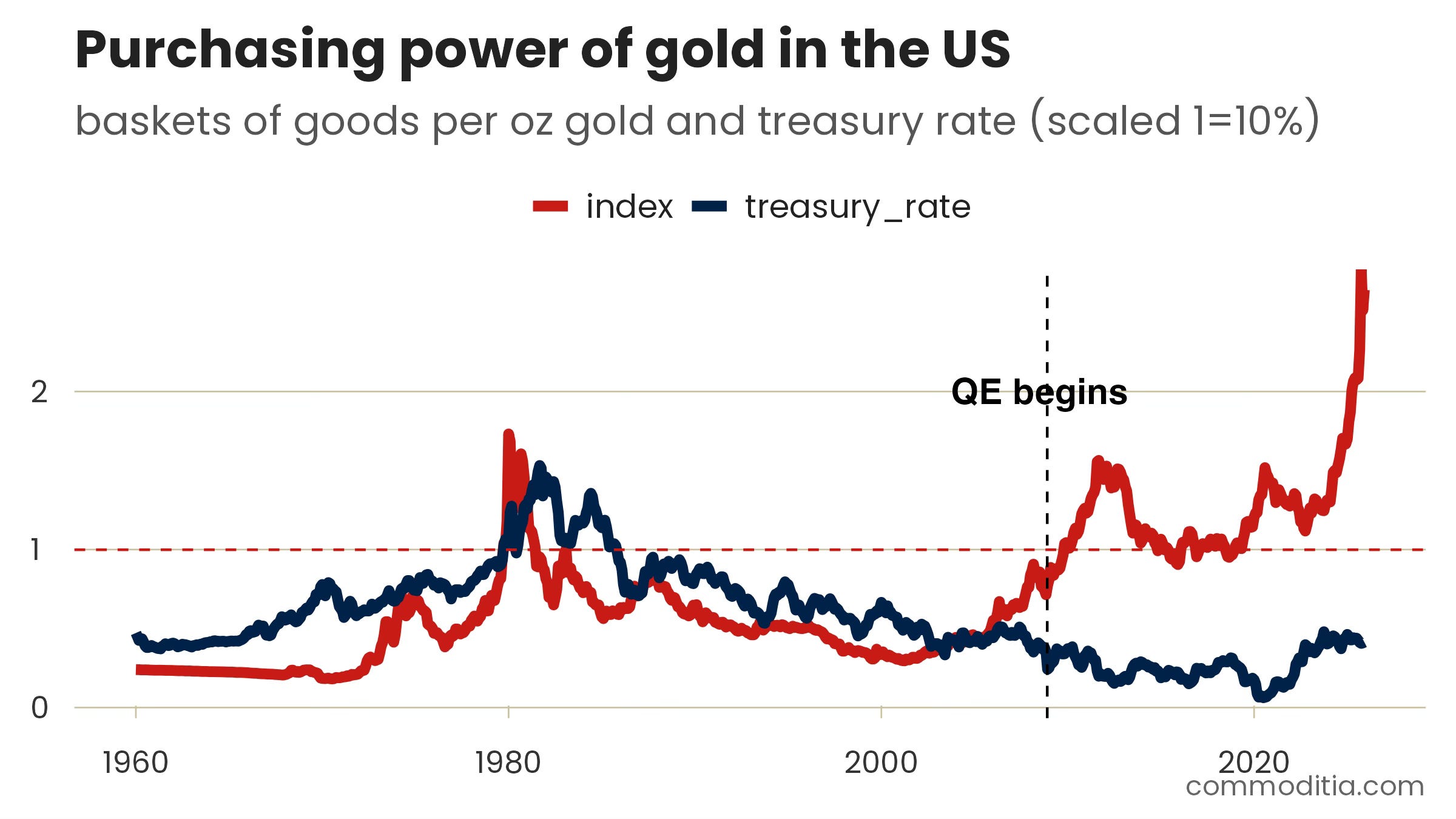
A gold coin was supposed to buy you a decent toga in Roman times, and a good suit today, and that has generally been true historically: gold holds its value against consumer goods and its price has been fixed as the price of money for many centuries. But today gold seems to be worth too much. Bear in mind that about one-third of a US consumer basket is shelter, while another third is food, energy or transport, and this seems doubly strange, especially when there is widespread awareness that shopping for your groceries these days, or filling up your car, is anything but cheap. But that is what Chart 4 is telling us.
Chart 4 also reveals how things normally return to Earth, and that is through rising interest rates. These are represented by the long-term treasury rate (the dark line). Back in the 1980s, gold rallied sharply against the consumer price index (CPI), reacting quickly and anticipating the panic and geopolitical shocks to come. In 1979 Iran had a revolution, and the Soviet Union invaded Afghanistan. President Nixon also dismantled Bretton Woods and freed the gold price in 1971, allowing it to find its true level against a product basket. This was a time when interest rates climbed quickly.
There is another anomaly from this period that is worth bearing in mind. Normally, rising rates are fatal for gold prices, since gold pays out no income. However, yields and gold prices moved together for the simple reason that between 1979 and early 1980, 3-month treasury bills rose from 11% to 13% while consumer inflation was running hot at around 14%. Put simply, real interest rates were negative and so government debt was constantly falling in real value. Right now neither interest rates nor inflation are anywhere near these levels, though they have started to move upwards for the first time in a very long time.
It bears repeating that history does not tend to repeat itself so simply, although right now it seems to be trying pretty hard to do just that given events in the Middle East and Ukraine. All we can see is that, historically speaking, there is an awful big gap between the gold-adjusted price of a basket of goods and US Treasury rates, and in the past, a sharp rise in the gold price against goods was associated with rising rates. It is not difficult to get the feeling that there might be quite a bit of macro adjustment yet to happen, even when it feels like we have already had enough. Recent long-term rates pushing towards 6% perhaps give a sense of what is to come.
Can AI keep the show on the road?
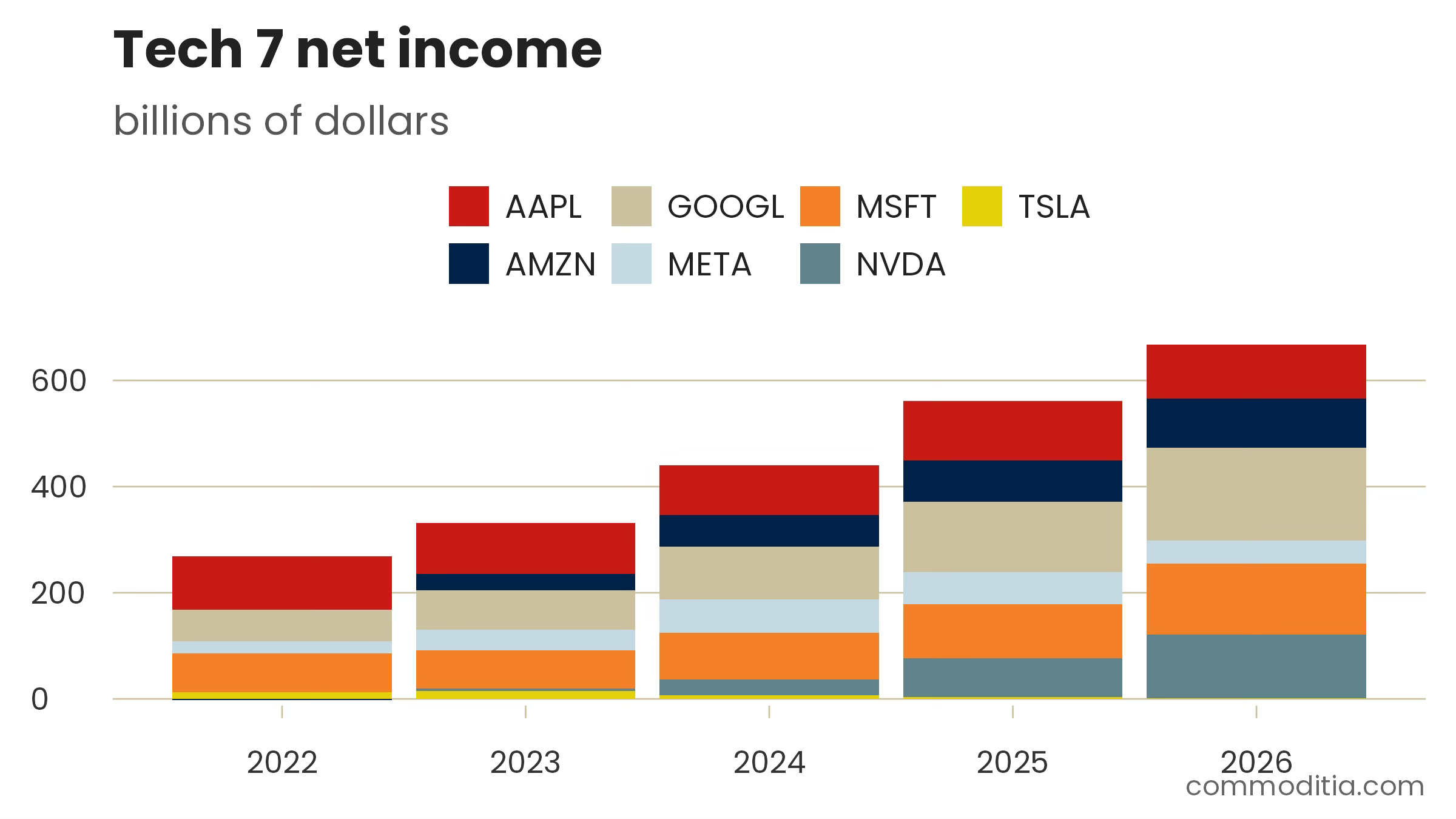
So now we turn to AI. You would be pretty brave to bet against the Big 7 tech companies at the moment, especially when their earnings growth has been so strong. Chart 5 makes that clear. But it also hints at why there may be some kind of confrontation coming in the near future.
Chart 5: Big Tech earnings have been growing strongly
One reason interest rates have been so low over the last decade is revealed in Chart 6. The US Fed and other central banks have churned out huge volumes of cash in the form of quantitative easing (QE), and this has been a big factor in pushing down interest rates and also bidding up asset prices. At the peak, the Fed bought up some nine trillion dollars of assets and mainly US treasuries.
Chart 6: Fed largesse has helped fuel an asset boom that is now unwinding
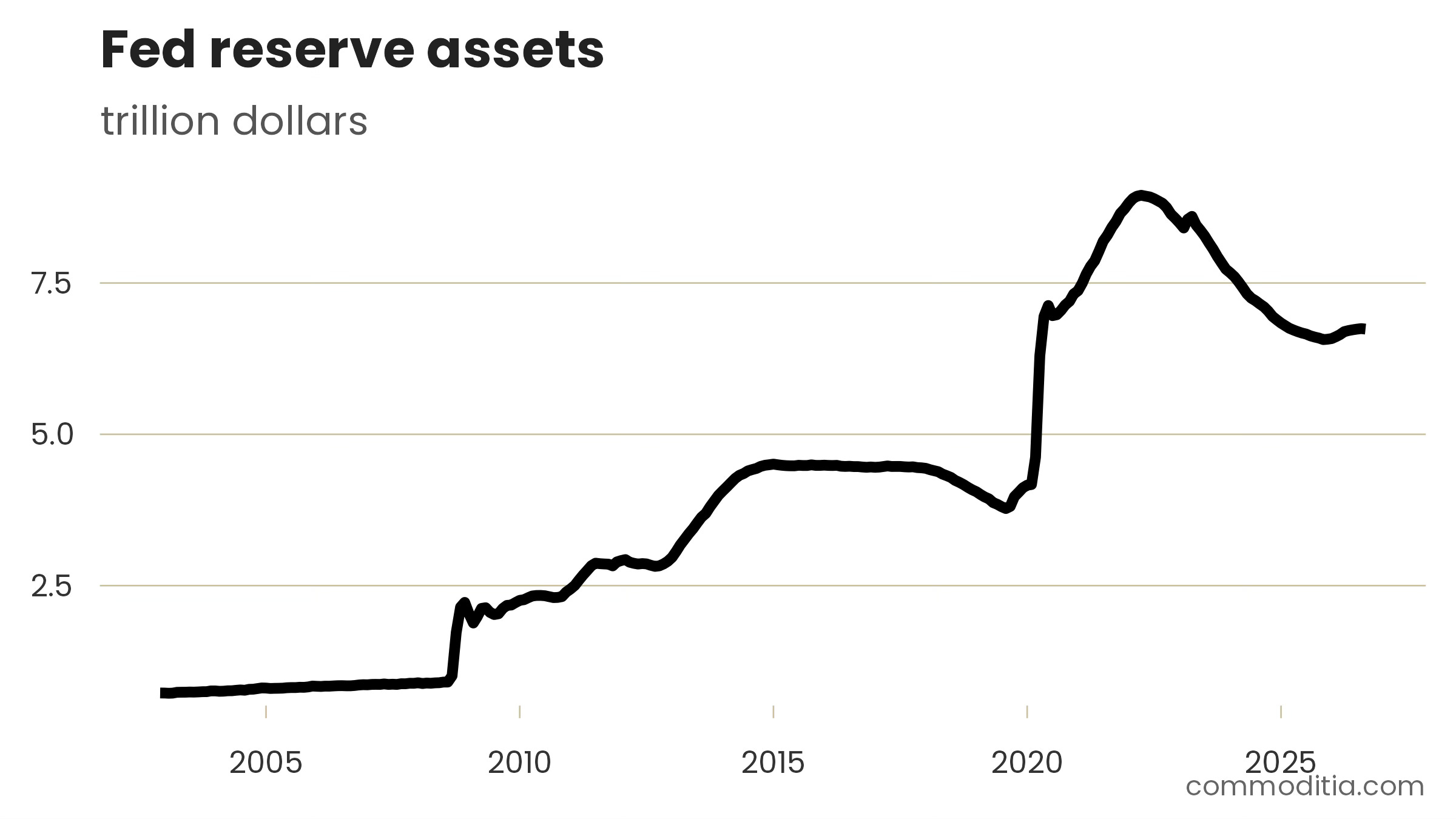
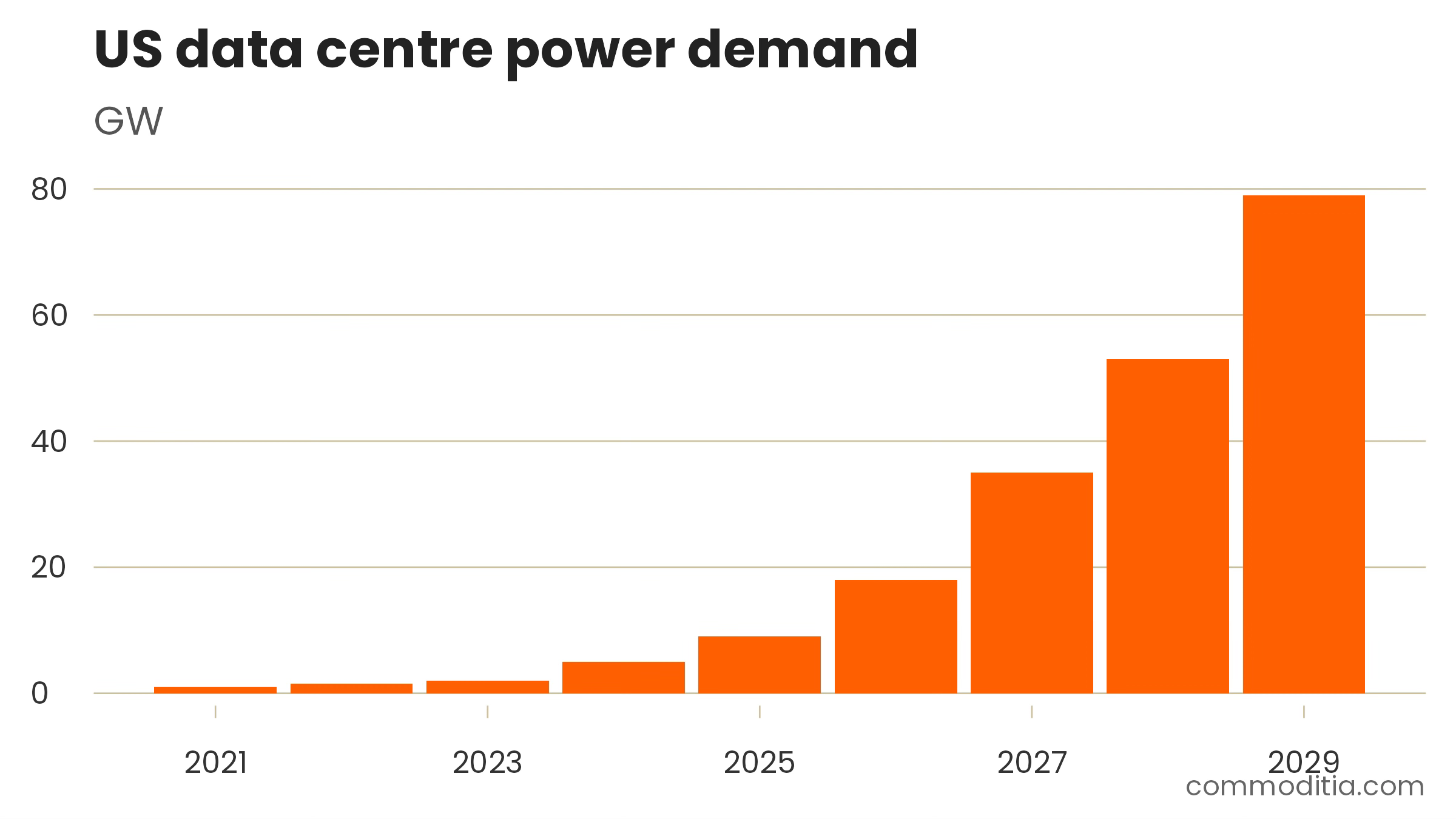
Now it is estimated that at least this dollar amount is being poured back into AI investments in power, chip, and data centre infrastructure in the US alone. For the first time in a long time, the Big 7 are borrowing big, drawing down their substantial cash reserves, and somehow reversing the QE of a previous decade. This is surely part of the reverse in treasury rates. But AI is also energy-intensive, as Chart 7 reveals. This is not quite the internet. Type a short sentence into AI, and you might not be asking it to locate a web page, but to solve some incredibly complicated mathematical problem. That takes compute power, and that requires energy1.
Chart 7: AI is not the internet: it consumes lots of power and this costs money
So what is the confrontation in the future? It is one very familiar to standard economics. As AI use grows, so does demand for energy and capital, and rising interest rates and energy prices will eat into Big Tech profits and discount their future growth much more heavily. It becomes a race against time to prove that AI revenue growth can match the growth in these costs.
Where that equilibrium settles is anyone’s guess, but when we find it, and that may be soon, perhaps very soon with the IPO of Anthropic, it will likely be a shock for everyone. Short term, the juggernaut that is AI investment will likely pull on prices until it can pull no more.
The longer term: the starch-protein tug of war
This brings us neatly to the real point of AI, which must, if it is not to consume us or destroy us, as some people now speculate, then at least it should make us all more productive. If it does not, we will have wasted an awful lot of capital and energy on asking a lot of dumb questions. Assuming that it does make us more productive, what might it do for the starch industry?
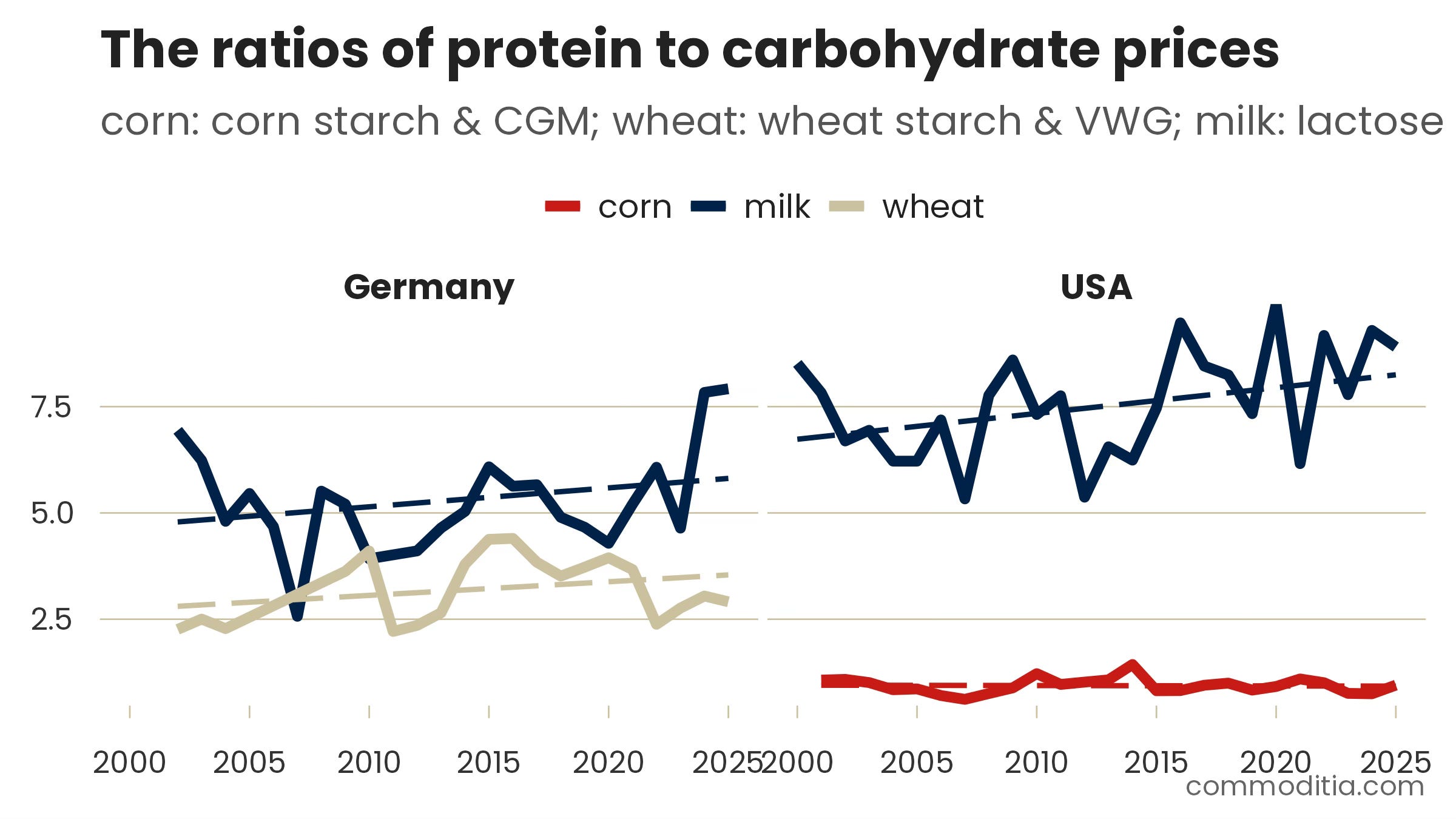
Chart 8 reveals one of the problems currently facing both the dairy and starch industries. Let’s focus on dairy for a moment to really highlight the problem. A pint of milk is a highly evolved form of nutrition. It is roughly 88% water and only 12% or so solids. Of those solids, roughly 5% is carbohydrate in the form of lactose, another 3.5% or so is fat, leaving roughly the same remaining proportion as protein. The protein fraction is approximately 80% casein with the rest being whey.
Chart 8: This is called “proteinflation”
In the distant past, whey was essentially a useless by-product of cheese production and was often dumped or put into pig feed. Then a few bright sparks in the 1970s, with the help of membrane filtration, learned how to mass-produce a highly soluble, tasteless protein concentrate that the fitness industry absolutely loved and that now, it seems, everyone loves. Breakfast? You just take a spoon or so of white powder from a big bag and put it in a blender with whatever you like, even water, and suddenly you have a very concentrated protein meal.
What is even more fascinating is that during those same 1970s, the starch industry discovered another product that was for a while gold. They called it high-fructose syrup (HFS), and you could make it from corn starch or any other starch for that matter, through a simple process of splitting up the sugars naturally contained in starch in the form of glucose. The geopolitical tensions of the 1970s sent sugar prices through the roof alongside oil prices, and cheap high-fructose syrup rapidly took over the US and to a lesser extent the global sweetener markets, especially when Coca-Cola started using HFS in 1980 to cut costs. This was a boom time for the starch industry, until, of course, consumers turned heavily against refined carbohydrates, which became associated with obesity. Since then the starch industry has been scratching its head to know what to do with all that starch.
What did consumers do once they had gained weight? They eventually started injecting themselves with what have come to be called GLP-1s such as Ozempic, Wegovy, and Mounjaro. These facilitate rapid loss of weight, but with one potential clinical side effect, which is severe muscle loss. And so we come full circle.
Whey protein is highly soluble and rapidly digested. A liquid whey shake allows consumption of 20 to 30 grams of high-quality protein in a few sips without overstretching an under-siege stomach. What was pig feed in the past now retails for up to $50 per kilogram, and consumers cannot get enough of it. This has not gone unnoticed in the starch industry, which is not in the business of producing protein but which also has a lot of these by-product proteins floating around. Quickly, the by-product has become the main product.
Why weather and carbon are compounding the problem
So the world is turning increasingly to protein, but climate and increased carbon may be pushing crops in the opposite direction. Increased atmospheric carbon pushes arable crops to synthesise carbohydrates more quickly, and this is generally bad for protein content. This is particularly true in wheat and the tuber crops which are leading starch crops.
At the same time, increased temperatures and drought restrict a plant’s ability to synthesise starch, which increases protein percentages but at the cost of lower yields. Corn, which is highly optimised to carbon, and which is the world’s leading starch crop, is particularly sensitive to this, especially because it grows in warmer latitudes.
It is hard to say exactly what the net effect is, but it looks like starch production is heading into more temperate latitudes and that there might be relatively more starch and relatively less protein.
For the starch industry, this presents both a problem and an opportunity, which brings us directly to Chart 8. When you look at the price of protein in relation to starch, comparing, for example, the price of vital wheat gluten with the price of wheat starch, both extracted in the wheat starch process, or the price of what is called WPC80, a whey protein concentrate, to the price of lactose, you see strong “proteinflation”. Protein is increasingly where all the value is in the separation process. Wheat starch producers now increasingly sell wheat protein. Milk processors are dumping cheese and lactose to try to maximise sales of whey protein. They are now looking at casein for another protein source. Something tells you that this cannot be a long-term happy story, especially if you have been in the industry as long as we have.
The obvious solution is to try to turn all that starch and lactose into something more valuable like, say, protein. You can precision ferment any number of proteins from starch. Moreover, when you do this, you get a whole lot more protein than you do from a cow, per hectare of land, and it also takes less energy. You can work out for a standard hectare of land how much grain that land will produce, and how that can be converted into protein either through a cow or via a precision fermentation process fermenting glucose, or even lactose. Precision fermentation delivers somewhere between four and ten times more protein per hectare of land. It also uses a lot less external energy than it takes to grow a cow, because most of the grain passing through a cow is used to keep the cow alive and not to produce milk protein.
This is perhaps why, a few years back, the industry got very excited about vegetable protein and why lots of people were predicting the end of cows. It was also why, around 2022, we tried to remind the industry that they had not properly understood how agriculture works and also why they were underestimating the longevity of the dairy industry (see: link to protein conference)
The problem is this. Greenfield precision fermentation is very, very expensive as many investors have found out, and so quite a lot of capital has been, quite literally, shovelled into the ground. In contrast, dairy cows may not be great at converting land into protein, but they are relatively low-cost producers of milk protein as far as capital expenditure is concerned, since you just buy a bit more pasture and fence it off. Their mammary glands are also miracle devices to concentrate protein in a way that industry has failed to replicate other than at high cost. When you weigh the efficiency gains against the capital costs, cows still look like a good bet.
Capital was expensive back then and it is likely to be even more expensive in a world of rising energy prices and interest rates. In short, and for the foreseeable future, there is no obvious way to solve what might be called the starch-protein problem unless, of course, people go back to simply eating what will be increasingly fairly priced cheese. You can also eat your starch in raw form as whole grains, but not many people fancy doing that in the modern world.
Back to AI. One thing these frontier models do seem to be really good at is synthetic biology and process technology. What problems might AI solve that we have not solved before? There are so many, but the basic principles are very simple:
Any success in radically raising crop yields would be a big deal for renewables, especially yields of key nutrients such as starch and protein. There is even talk of adapting photosynthesis, but changing what crops do, for example “pre-loosening” starch architectures, co-producing enzymes in crops, tackling rubisco carboxylation in C3 crops to give massive starch yields. Any of these could filter through into lower per hectare processing costs.
Next, you have to transform those nutrients at much lower energy cost. Growth in AI is likely to require all kinds of improvements in energy supply, and this could benefit starch producers. But it could also help with better cold-processing, for example via ultrasound, or perhaps through complicated modelling improve the low-temperature rheology of fluids to again lower the energy requirement of processes. Again, this lowers the cost of conversion.
One area AI seems particularly well adapted to is to greatly improve bio-reaction and titer rates through new synthetic enzymes, new metabolic networks in microbial hosts, and related improvements.
Any one of these pathways could give fermentation and other forms of conversion an increasing edge, and if that happens, it will level the playing field against conventional dairy production of protein since cows are already highly evolved creatures. It may also help solve some of the problems presented by weather changes.
What this probably means is that the next year or two will likely be difficult for parts of the starch industry, but not all, and at least until there are some real breakthroughs in conversion cost. There could be some consolidation in Europe and Asia through this adjustment period, and you could argue that this has already begun. Success will depend heavily on your product mix in these changing times. Chart 9 makes this clear.
ADM increasingly trades as some kind of an energy company, and its stock price increasingly follows the price of oil given how much of its footprint is now devoted to some kind of bio-fuel production. Strong commodity and energy prices have been good to ADM, but this means increasing energy efficiency would be something to keep an eye on.
Chart 9: Commodity inflation suits some processors and not others
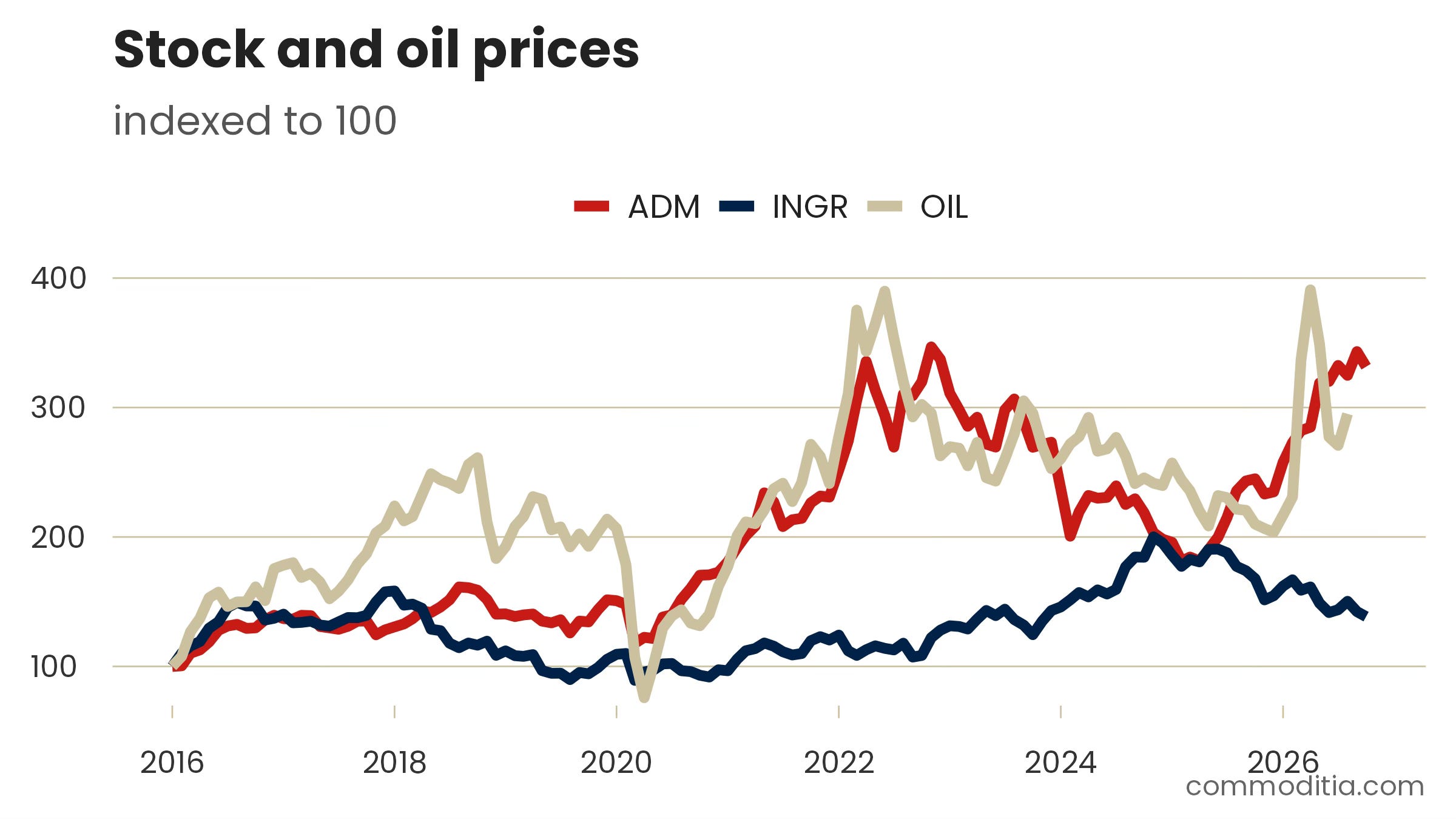
In contrast, Ingredion, which does a great deal of separation of crops into high-value consumer products and proteins, has faced headwinds from rising input prices. Bad weather and disease have also affected key crops in some regions, and a super El Niño will not help. But longer term, separation could get a lot more interesting once the smart people, or the smart machines, figure out how to do it in new and economic ways, and this could leverage any ability to market high-value products to consumers. And the interest in protein is unlikely to disappear even if the way in which it is consumed adapts. Until then, expect the price of your protein shake to keep on going up.
power data projections from Alpine Macro; official data FRED (St. Louis Federal Reserve)